

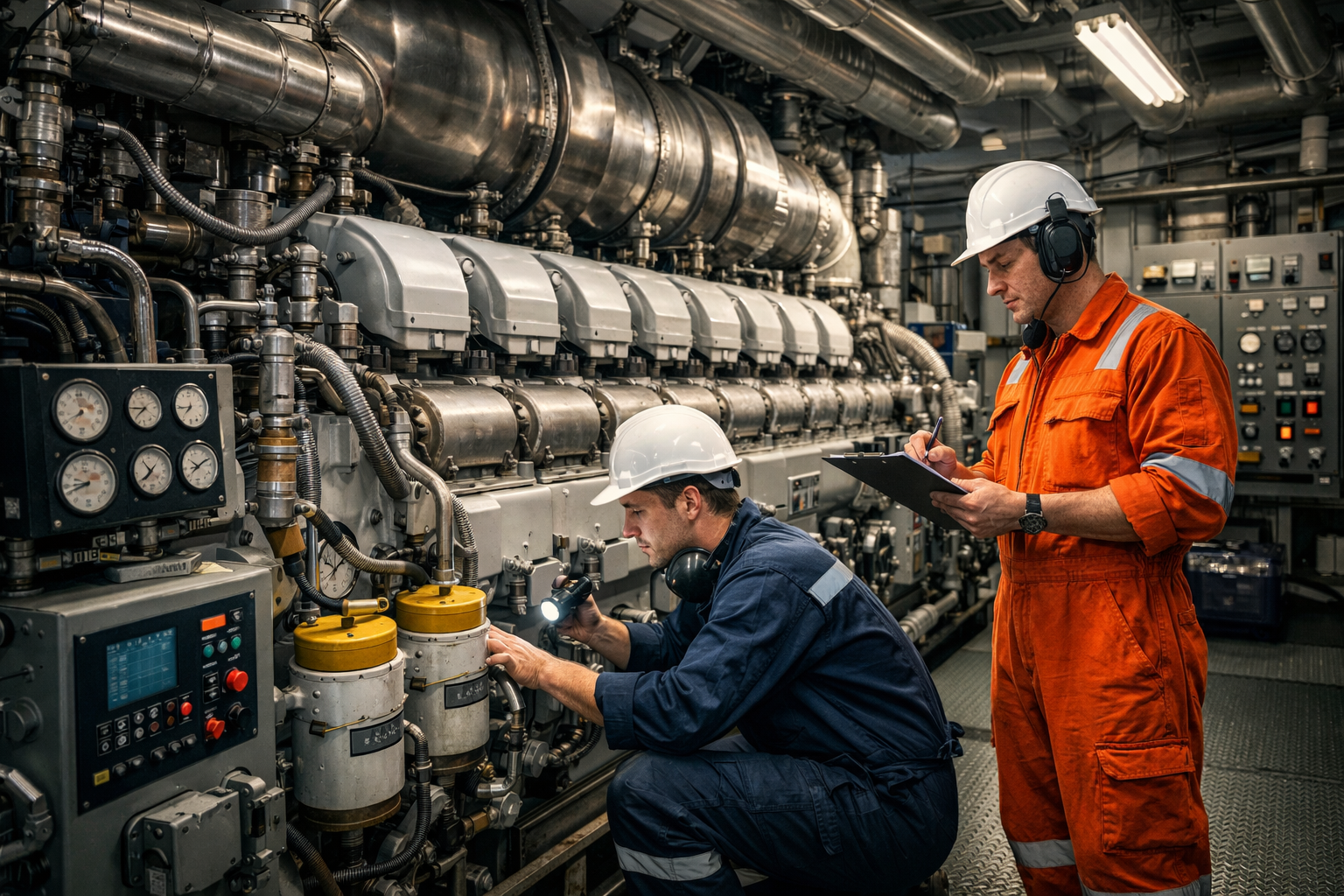
The heart of every commercial vessel are the marine diesel engines. These engines are used non-stop to haul cargo, commercially fish, assist in offshore activities, and transport people safely. Leisure boats only operate on weekends, and can even go a few weeks without operating, but commercial fleets push their engines to the absolute max. That is why the maintenance of commercial marine diesel engines goes beyond just being a technical task, it is a matter of tactical survival.
Consider operating an oil delivery truck on a run without any maintenance for weeks on end. That would be completely ridiculous, and a similar concept applies to marine engines. In this guide, we will demonstrate how commercial fleets maintain marine diesel engines, using simple, real-world examples and proven practices that ensure engines operate reliably and profitably.
Importance of Marine Diesel Engines in Commercial Fleets
Marine diesel engines are the core power source for commercial vessels. Whether it’s a cargo ship crossing oceans or a fishing boat heading out daily, these engines ensure operations continue without interruption. For marine inboard diesel engines commercial use, durability and reliability are non-negotiable. A minor engine issue can quickly escalate into lost revenue, delayed deliveries, or safety hazards. This is why commercial fleets treat engine care as a top operational priority rather than a routine task.
Why Efficient Maintenance Matters for Commercial Vessels
Efficient commercial vessel engine maintenance directly affects profitability. Well-maintained engines consume less fuel, produce fewer emissions, and operate more smoothly. On the other hand, neglected engines lead to breakdowns, emergency repairs, and costly downtime. Commercial operators understand that preventive maintenance is an investment, not an expense. It keeps vessels running on schedule and avoids unexpected failures in challenging marine environments.
Understanding Marine Diesel Engines for Commercial Fleets
Marine diesel engines for commercial fleets are engineered for continuous operation under heavy loads. Unlike car engines, they are built to deliver high torque at lower speeds. However, constant exposure to saltwater, humidity, and vibration increases wear and tear. Understanding how these engines work, fuel injection, combustion, cooling, and exhaust systems, helps fleet operators maintain them effectively and identify early warning signs before serious damage occurs.
Commercial Vessel Engine Maintenance Basics
The foundation of commercial fleet marine engine servicing lies in routine care. Basic maintenance includes checking oil levels, monitoring engine temperature, inspecting belts and hoses, and ensuring filters remain clean. These simple steps may seem small, but they prevent larger mechanical failures. Commercial fleets often train onboard crew to perform basic checks daily, ensuring problems are detected early rather than during critical operations.
Marine Engine Preventive Maintenance Explained
Marine engine preventive maintenance focuses on preventing failures instead of reacting to them. This approach involves scheduled inspections, replacing worn components before failure, and using diagnostic tools to monitor engine health. Fleets rely on maintenance logs and service intervals to ensure no task is overlooked. Just like regular health screenings keep people healthy, preventive maintenance keeps engines running reliably for years.
Daily and Weekly Marine Engine Maintenance Checklist
A structured marine engine maintenance checklist helps crews stay consistent and organized.
Daily Checks
Daily inspections include checking oil pressure, coolant levels, fuel lines, and listening for unusual noises. These checks help identify leaks, overheating, or abnormal vibrations early.
Weekly Checks
Weekly tasks involve inspecting air and fuel filters, checking belt tension, cleaning strainers, and examining exhaust systems. Regular weekly checks reduce the chance of sudden engine failure during long voyages.
Commercial Fleet Marine Engine Servicing Schedules
Professional fleets follow strict servicing schedules based on:
- Engine hours
- Manufacturer guidelines
- Operating conditions
Regular commercial fleet marine engine servicing includes oil changes, injector testing, valve adjustments, and system diagnostics to keep engines running efficiently.
Marine Diesel Engine Maintenance Tips from Industry Experts
Experienced marine engineers share valuable marine diesel engine maintenance tips gained from years at sea. They recommend warming up engines gradually, avoiding sudden load changes, using high-quality lubricants, and keeping detailed service records. These habits reduce internal stress on engine components and help crews spot performance issues early.
Fuel Management and Its Impact on Engine Health
Fuel quality plays a crucial role in commercial marine diesel engine maintenance. Contaminated fuel can clog injectors, reduce combustion efficiency, and damage internal components. Commercial fleets use filtration systems, fuel testing, and proper storage methods to ensure clean fuel reaches the engine. Good fuel management directly improves engine lifespan and reliability.
Marine Diesel Engine Performance Optimization
Marine diesel engine performance optimization focuses on getting the best efficiency from each engine. This includes fine-tuning fuel injection timing, maintaining turbochargers, and monitoring exhaust temperatures. Optimized engines deliver better power, lower fuel consumption, and reduced emissions—key benefits for commercial operators aiming to stay competitive.
Common Problems and Marine Diesel Engine Repair Services
Despite best practices, problems can still occur. Common issues include injector failure, overheating, worn bearings, and turbocharger damage. Professional marine diesel engine repair services provide specialized diagnostics, repairs, and overhauls to restore engine performance quickly. Fast response times are critical to minimizing vessel downtime.
Marine Engine Service for Commercial Boats
Reliable marine engine service for commercial boats goes beyond routine maintenance. Service providers often offer emergency repairs, on-site inspections, and long-term maintenance contracts. Many commercial fleets partner with trusted service companies to ensure expert support whenever and wherever it’s needed.
Managing Marine Diesel Engine Maintenance Cost
Controlling marine diesel engine maintenance cost is a major concern for fleet operators. Preventive maintenance, crew training, and condition-based monitoring help reduce long-term expenses. Although routine servicing requires upfront investment, it significantly lowers the risk of expensive emergency repairs and engine replacements.
Conclusion
Efficient commercial marine diesel engine maintenance is essential for reliable fleet operations. By combining preventive care, structured servicing schedules, skilled crew involvement, and professional repair support, commercial fleets keep their vessels operating smoothly. Just like maintaining a high-performance athlete, consistent care ensures marine diesel engines deliver long-lasting, dependable performance on every voyage.
FAQs
1. Why is preventive maintenance important for commercial marine engines?
Preventive maintenance helps detect issues early, reduces breakdowns, and extends engine lifespan.
2. How often should marine diesel engines be serviced?
Service frequency depends on engine hours and manufacturer guidelines, but inspections are typically daily or weekly.
3. What affects marine diesel engine maintenance cost the most?
Fuel quality, operating conditions, servicing frequency, and crew expertise all influence maintenance costs.
4. Can onboard crews handle basic engine maintenance?
Yes, trained crew members can perform routine checks and basic servicing tasks effectively.
5. Do commercial fleets rely on external repair services?
Yes, professional marine diesel engine repair services are essential for complex diagnostics and major repairs.
